Invoice calculators · Updated August 28, 2026
Invoice Deposit Calculator
Slide the project total and the deposit percentage — see the deposit to invoice now and the balance that follows on completion. Free, in your browser.
Deposit due now
How much deposit to ask for
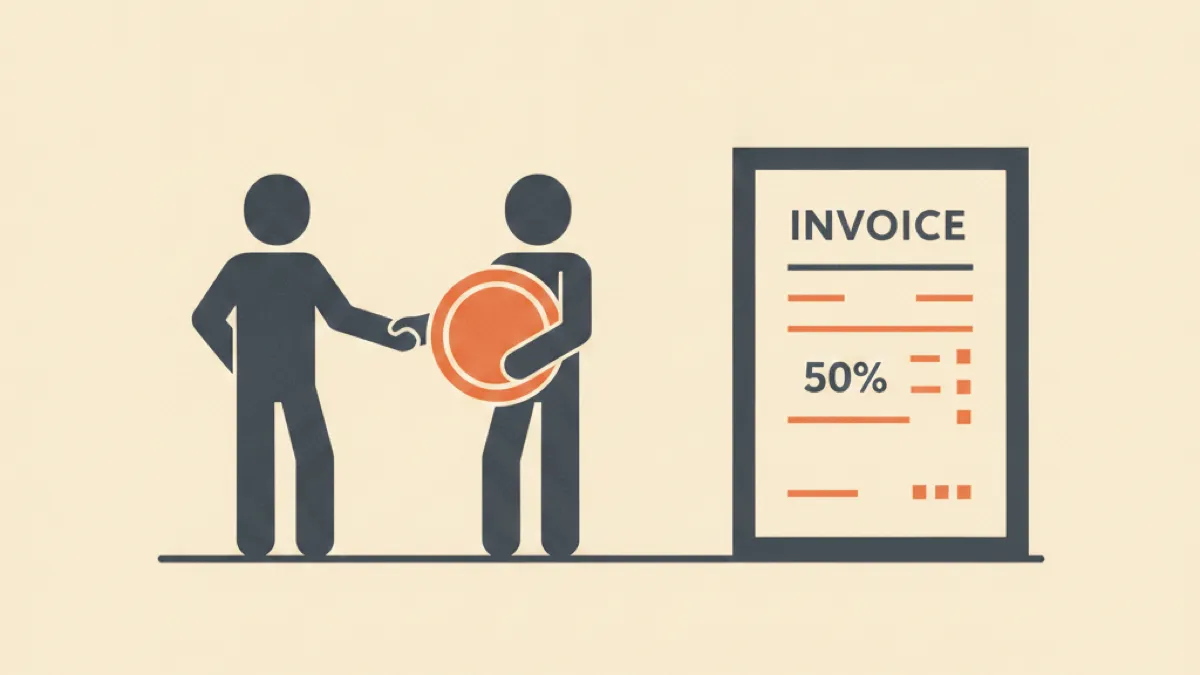
30–50% is the common range for project work — enough to cover materials and commit both sides without asking the client to fund the whole job upfront. 50% is standard where materials are heavy (construction, photography with rentals); 30% fits service-led projects. Whatever you choose, the invoice line should carry both numbers: "Deposit — 50% of $2,400 project total — $1,200", with the estimate it comes from.
The two clean ways to put a deposit on paper — a separate deposit invoice, or a deposit line on the final bill — are covered in the deposit invoice generator page, and the reasoning by project type lives in the deposit guide.
A worked example
A $2,400 project at a 50% deposit: invoice $1,200 now, and the remaining $1,200 on completion. On the final invoice, the deposit goes in the generator's Amount paid field — the PDF then shows the full scope, the deposit already received, and the balance due computed for you.
Deposit FAQ
Should the deposit be a percentage or a flat amount?
Percentages read as fair and scale with the job — that is why they are the norm. A flat amount works for small fixed-scope jobs ("$200 to book the date"). Either way, print the number on the invoice line, not just in the conversation.
Is the deposit calculated before or after tax?
Most businesses take the percentage of the pre-tax project total and handle tax on each invoice as it is issued. Tax rules on prepayments differ by jurisdiction — when in doubt, ask your accountant.
What if the client won't pay a deposit?
For new clients on project work, a refused deposit is a signal worth taking seriously. A middle ground is a smaller commitment — 15–20% — or milestone billing, where the first invoice lands at an early, well-defined point instead of day one.